Every year, retirees flock to warmer or colder climates as they seek balmy weather and seasonal entertainment. There's even a colorful name for these intrepid travelers: snowbirds. Depending on where you live, you may have heard this term before. However, over the years, the definition of a snowbird has changed. In the past, this term was applied to those who traveled south in the winter to escape the cold. Now, it applies to anyone, although usually retirees, who travel seasonally to spend time outdoors and enjoy their favorite activities.


What is a "Snowbird?"

Snowbirds are typically retired—or are close to retirement—and have made the decision to spend the winter in a state other than where they normally live.


There are a few different ways you can stretch your fledgling snowbird wings. Some choose to purchase a second home, while others look for a rental property they can return to annually. Others still opt for a winter on the road by purchasing an RV.


Getting Started

Set a Goal

Like most things in life, it's helpful to settle on a goal before you begin. Start with the basics, such as deciding on where you want to go, how long you would like to stay, and, of course, your ideal budget. Some important budgeting concerns to keep in mind may be the following:


  • Travel Expenses—Basically, how will you get to your destination? If you're flying, have you secured transportation once you have arrived? If you're driving, have you evaluated the cost of fuel, wear and tear, or any potential parking fees?
  • Activities—Once you've arrived, it can be helpful to have a general idea of what sort of activities you may enjoy. This doesn't need to be a hard itinerary so much as a way to holistically evaluate your daily costs.
  • Food & Drink—Depending on how you've decided to travel, this can mean anything from meals out with friends to a meal cooked at your winter home.


Choose Your Location

Because you'll be spending a fair amount of the year at your chosen destination, it's important that you identify what matters most to you at this step.


For example, does a 55+ community sound like something you'd enjoy? Age-restricted communities can be found in every state and are often full of activities, fun, and potential new friends. If you enjoy the sun, sand, and refreshing ocean waters, you may want to consider what it would be like living in a beach community. Often, travelers learn there's a large difference between living near the ocean and vacationing near one.


No matter what you choose, this is the point in the process where you should spend as much time as it takes to feel confident in your destination.


Renting vs. Buying

Depending on where you decide to travel, renting on a seasonal basis can cost thousands over the length of your stay. However, the funds you spend on renting could also pay for a year of expenses while you enjoy your new, second home. Sure, buying a home is a significant investment, but it may also open up rental opportunities and give you the freedom to visit your second home whenever you please. To help you make the best choice, your financial professional may have resources that you can access as you consider your decision.


Pros & Cons

Sounds great, right? However, before you begin searching for your perfect winter home, there are a few items to consider. After all, wintering in more temperate locations can often mean more than enjoying the sunshine on your back and warm sand beneath your feet.


Owning a Recreational Vehicle (RV)

The allure of the open road and nearly limitless freedom can appeal to many retirees looking to spend their winters elsewhere. However, sometimes, the reality of RV life can differ from one's perceptions. The following are some items to keep in mind before starting your journey:


  • Comfort Behind the Wheel—Depending on the size of your vehicle, you may need a commercial driver's license (CDL), even if your RV is a non-commercial vehicle (which most are). 
  • Try before you buy—If you aren't sure which direction to go with the size and type of RV, rent a unit similar to what you are considering. You'll soon know if life on the road is for you.
  • Ask a (Financial) Pro—A candid conversation with your financial professional may be a smart move before making any permanent decisions. Your RV will most likely depreciate in value over time, and the guidance of a professional can help avoid financial issues that may arise down the road.


Owning a Second Home

If you prefer something more permanent, a second home may be right for you. A second home can allow for longer trips and more entertainment and socialization opportunities; in addition, it may retain—or even gain—value over time. However, just like any major real estate purchase, there are some considerations to keep in mind:


  • Location, Location, Location (and Price)—The ultimate price for your new home will depend heavily on the location you choose. Even if you have experience in the real estate market, it can be helpful to enlist the aid of a real estate agent in your search. Having an inside source who lives in the area where you wish to purchase your home can make a huge difference.
  • Televised Inspiration—If you've ever watched a real estate show on any given number of networks, you've already started your search. These shows, although entertaining, can be invaluable as learning tools. Pay attention to the triumphs and mistakes these shows often highlight so that you can hit the ground running.
  • Enlist a Friend—Anyone who has shopped for a home knows how difficult it can be to remain objective. Sometimes, we see a home and love it so much, its shortcomings can fall by the wayside. Instead, try asking an impartial friend to weigh in on your top choices. It may be a little painful, but what they notice can save you from headaches in the future.


Owning a Rental Property

Many of the same considerations of second ownership apply here as well. The major differences arise when you decide to rent your property while you're not using it. After you've purchased your property, the following are some potential ideas to help make your rental property a success:


  • Management—A reputable property management company can be one of the largest boons for private rental property owners. For a fee, these companies will maintain the property, handle tenant issues, and make sure your investment is well tended. When you start the search, try asking your real estate agent for a recommendation to get the ball rolling.
  • Fractional Ownership—Purchasing a rental property can sometimes feel like a large investment. If you're not quite ready to take the plunge, consider fractional ownership. By splitting the investment among multiple owners, you may be able to defray the cost and potential risk of your rental property.
  • Research Is a Must—For this, the internet is your best friend. Spend some time reading through message boards and posts from other rental property owners. Oftentimes, you can find helpful, actionable tips or ways to avoid mistakes that others have made during their search.


Living the Dream?

No matter where you decide to spend part of your year as a winter guest, it may be helpful to think of your new endeavor as a lifestyle you're creating. This mindset can encourage you to think about the financial and emotional aspects of seasonal living in a more objective way. Who knows? Maybe your new lifestyle will be closer to your dream vacation than you think. Contact us today to learn how we can guide you through this exciting transition.


This content is developed from sources believed to be providing accurate information. It may not be used for the purpose of avoiding any federal tax penalties. Please consult legal or tax professionals for specific information regarding your individual situation. The opinions expressed and material provided are for general information, and should not be considered a solicitation for the purchase or sale of any security.

Recent Buttonwood Articles


Estate planning documents representing family, legacy, and financial planning.
By Danielle Brown MSF, CFP® • September 28, 2026
The 2026 federal estate tax exclusion is $15 million per individual. Learn why being under the threshold does not make estate planning irrelevant.
Buttonwood Financial Group Investment Policy Committee May and June 2026 portfolio rebalance summary
By Jon McGraw, Investment Policy Committee Chair, Buttonwood Financial Group (Kansas City) • July 20, 2026
How our Investment Policy Committee approached the May & June 2026 rebalances: trimming equity risk, upgrading bond quality, and adding liquid alternatives.
Child placing coins into a piggy bank while learning about saving and financial responsibility.
By Danielle Brown, CFP MSF • July 7, 2026
What families should know about Trump Accounts eligibility, contributions, financial literacy. Child investment accounts may fit in broader financial plan.
By Jon McGraw • July 1, 2026
Beyond fees, DIY investing carries hidden costs — time, taxes, and coordination. A Kansas City wealth management perspective on when self-directed makes sense
SpaceX and Anthropic are filing for the two largest IPOs in history. Learn how index fund exposure,
By Kristy Wieland • June 10, 2026
SpaceX and Anthropic are filing for the 2 largest IPOs in history. Index fund exposure, 401(k) passive buying, and mutual fund holdings mean you may already own them
By Kristy Wieland • May 16, 2026
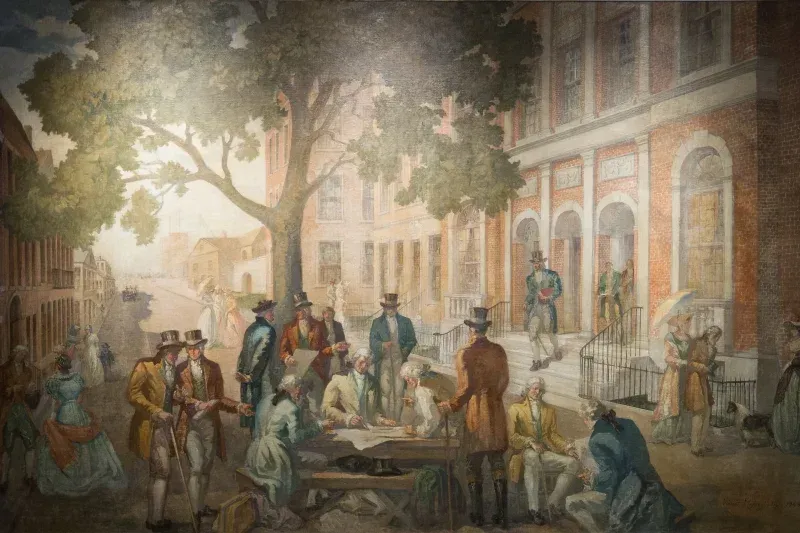
The Buttonwood Agreement: Where American Finance Took Root — and Why Our Name Exists The Buttonwood Agreement was a compact signed on May 17, 1792, by 24 stockbrokers and merchants beneath a buttonwood tree at 68 Wall Street in New York City. It established the rules of organized securities trading in America and laid the foundation for what would become the New York Stock Exchange. Buttonwood Financial Group takes its name directly from this founding moment; as a daily commitment to the integrity, transparency, and long-term thinking those original brokers put on paper. What was the Buttonwood Agreement, and why it still matters The Buttonwood Agreement came at a moment of crisis. The Panic of 1792, America's first speculative bubble and market collapse, had shattered public confidence in capital markets. Prominent financiers defaulted. Prices fell. Investors panicked. Alexander Hamilton worked to stabilize the system, but the lasting fix came from the professionals themselves. On May 17, 1792, 24 brokers gathered under a buttonwood (sycamore) tree outside 68 Wall Street and signed a two-sentence agreement: they would deal only with each other, charge a standard commission of one-quarter percent, and give preference to fellow signers in all negotiations. Simple. But the effect was transformative. By agreeing to hold a higher standard collectively, they rebuilt confidence in the market itself. The Buttonwood Agreement is widely regarded as the founding document of the New York Stock Exchange and of organized American finance. Why Buttonwood Financial Group carries this name Boutique wealth management firms are built on process and trust. When we named our firm Buttonwood Financial Group, the choice wasn't aesthetic; it was philosophical. Our name is a daily accountability measure; a reminder that the values those brokers signed onto in 1792 — integrity, structure, and responsibility — are exactly the values our clients deserve today. The families and individuals we serve aren't looking for surface answers and financial products. They're looking for an experienced team that has been tested across market conditions, that communicates honestly, and that approaches every client relationship from a fiduciary capacity in a long-term commitment. That's what an established boutique wealth management firm looks like in practice. What experience really means Experience in this industry isn't about credentials alone. It means you have been present with clients through market downturns and periods of uncertainty. You have worked alongside families through estate complexity, business transitions, and inheritance conversations. You have coordinated tax strategy, cash flows, and generational goals at the same time; because for most families, those things can't be separated. Our Team brings that depth to every engagement. Not because we're proud of our tenure, but because the people we serve deserve to work with real people whose judgment has been informed by real world complexity and a wide range of client circumstances. The values that haven't changed in 234 years The Buttonwood Agreement was forged in a crisis to restore confidence. That context mirrors what many clients feel when they first reach out to a firm like Buttonwood. The financial world is complex, opaque, and hard to navigate. Our commitment is to bring transparency, fiduciary responsibility, and honest communication to every relationship, the same values those brokers enshrined in 1792. Roots matter. They tell you where a firm stands when things get hard. On Buttonwood Agreement Day, we honor that founding moment, and recommit to carrying it forward. Connect with Buttonwood Financial Group If you're evaluating whether your current wealth management relationship reflects these values, we'd welcome the conversation. Our advisors work with individuals, families, and business owners on comprehensive, fiduciary-driven financial plans built around your long-term goals. Frequently Asked Questions What is the Buttonwood Agreement? The Buttonwood Agreement was a compact signed on May 17, 1792, by 24 stockbrokers and merchants in New York City. It established standardized rules for securities trading, dealing only among members, and charging a fixed commission. It is considered the founding document of the New York Stock Exchange. When is Buttonwood Agreement Day? Buttonwood Agreement Day is observed annually on May 17, marking the date the original agreement was signed in 1792 outside 68 Wall Street in New York City. Why is the Buttonwood Agreement significant in finance? The Buttonwood Agreement replaced chaotic, unregulated securities auctions with a system of structured, trust-based trading. It restored public confidence after the Panic of 1792 and established the foundational principles, integrity, accountability, and standardized commissions, that governed Wall Street for nearly two centuries. What does Buttonwood Financial Group do? Buttonwood Financial Group is an independent SEC Registered Investment Adviser. A boutique wealth management firm. The firm works with individuals, families, and business owners to provide both financial planning and investment management services. By serving as the primary financial advisor and administrator, Buttonwood is essentially acting as the family's "CFO" while the client remains as the family "CEO." Buttonwood strives to organize, formalize, implement, and monitor financial strategies consistent with clients' multi-generational goals and objectives. What makes a boutique wealth management firm different? Boutique wealth management firms typically offer more personalized service, deeper advisor relationships, and a fiduciary-first approach. Advisors and their support teams generally work with fewer clients and provide more integrated guidance and may reach a deeper level of strategy across investments, tax, business and estate planning, and financial planning. How do I choose an experienced financial advisor? We often see the following criteria: Look for advisors with a fiduciary obligation, verifiable credentials (CFP, CFA, or similar), a transparent fee structure, and experience working with clients whose situations are similar to your own. Confirm the advisor's registration status at adviserinfo.sec.gov. B uttonwood Financial Group is a registered investment adviser. The information provided in this article is for general informational purposes only and does not constitute investment, financial, tax, or legal advice. Past results are not indicative of future performance. All investing involves risk, including possible loss of principal. Please consult a qualified professional for advice specific to your situation.

Are you ready to explore the benefits of your very own Family CFO?

LET'S TALK

Buttonwood Services


About Buttonwood Financial Group